AI · Conversational AI

Conversational AI chatbots that contain real volume, not just answer FAQs

Banao designs, builds, and runs conversational AI — chat and voice agents that read what a customer actually means, answer from your own data, and either resolve the conversation or hand it to a person without dropping the thread.

We engineer for the number that pays the bill: how many real conversations the agent finishes end to end, and how cleanly it steps aside when it shouldn't. The same discipline runs inside Banao, where a conversational agent screens our own engineering hires before a recruiter opens the pile.

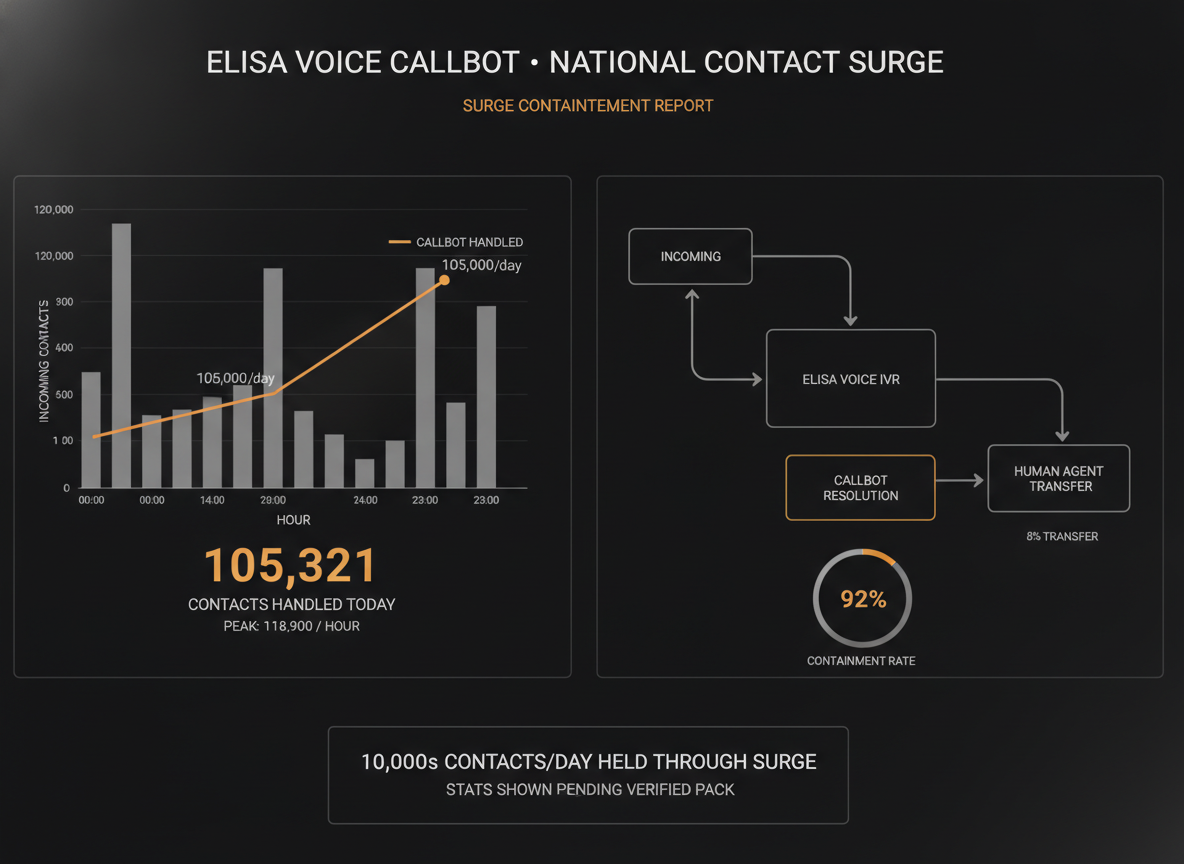
Elisa— our AI voice callbot held a national contact surge that the carrier's legacy queue could not.

What we build into a conversational AI agent

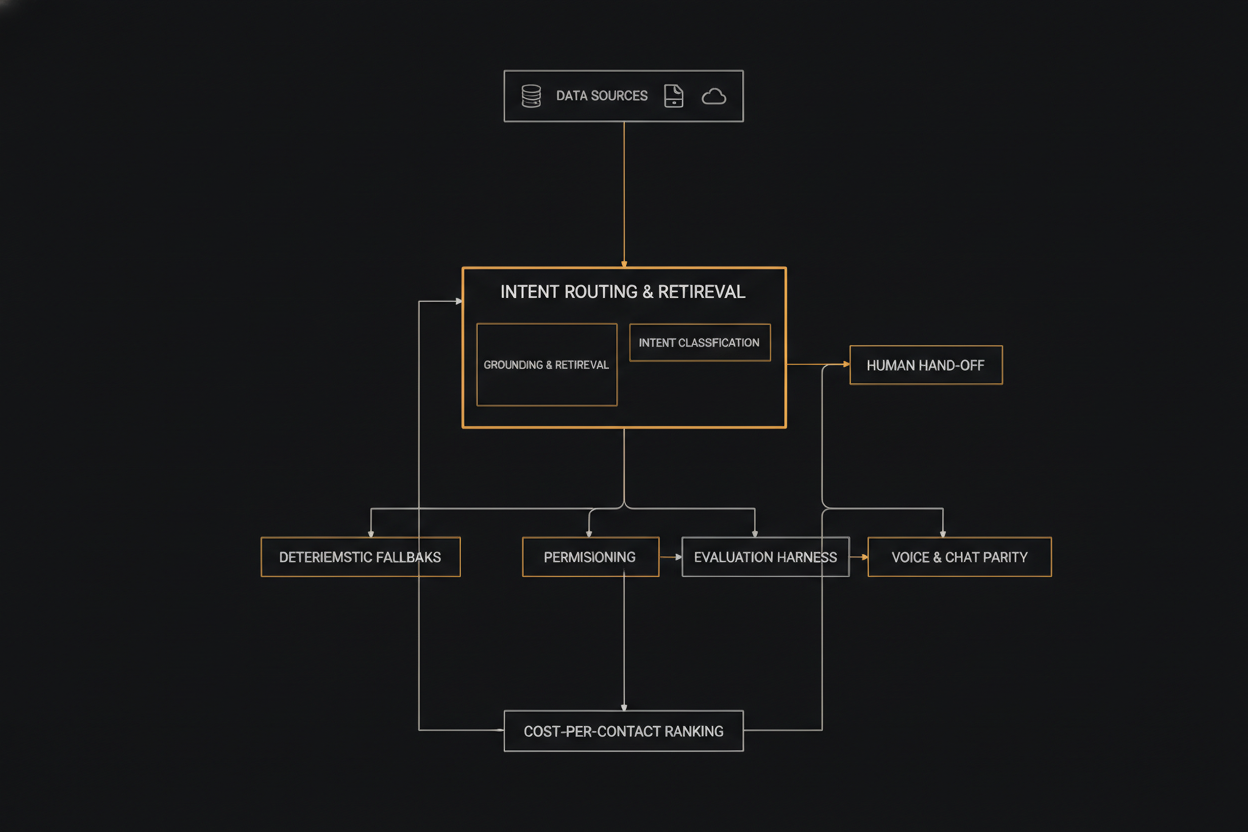
A chatbot that lasts is not one model and a chat window. It is intent understanding, grounding in your data, an escalation path, integrations that act, and the monitoring to keep it honest — we own all of it.

Conversation discovery & containment modelling

We rank your conversations by cost and volume and set a containment target before any build — so the agent is pointed at the expensive queues, not the ones that were already cheap to answer.

AI chat agents for web, WhatsApp & in-app

Production chat agents for support, qualification, and self-service on the channels your customers already use, grounded in your knowledge base so answers come from your business and not a generic model.

Voice AI & callbot automation

Natural-language voice agents for phone lines, IVR, and in-app calling — the same architecture pattern behind the Elisa callbot that absorbed tens of thousands of contacts a day.

RAG knowledge grounding

Retrieval-augmented generation and vector search over your documents, tickets, and policies, so answers stay current as your business changes without retraining a model each time.

Multilingual & Arabic–English agents

Agents that hold a conversation across languages, including the bilingual English/Arabic assistant we shipped for the UAE national authority Majra, for teams serving the GCC and global users.

Intent, sentiment & escalation routing

NLU that reads intent and mood and routes the right conversation to a human at the right moment, so the agent deflects volume without trapping a frustrated customer in a loop.

CRM, ticketing & backend integration

We wire agents into Salesforce, Zendesk, e-commerce, and internal systems so a conversation triggers a real action — an order, a ticket, an account change — instead of a dead-end reply.

Guardrails & hallucination control

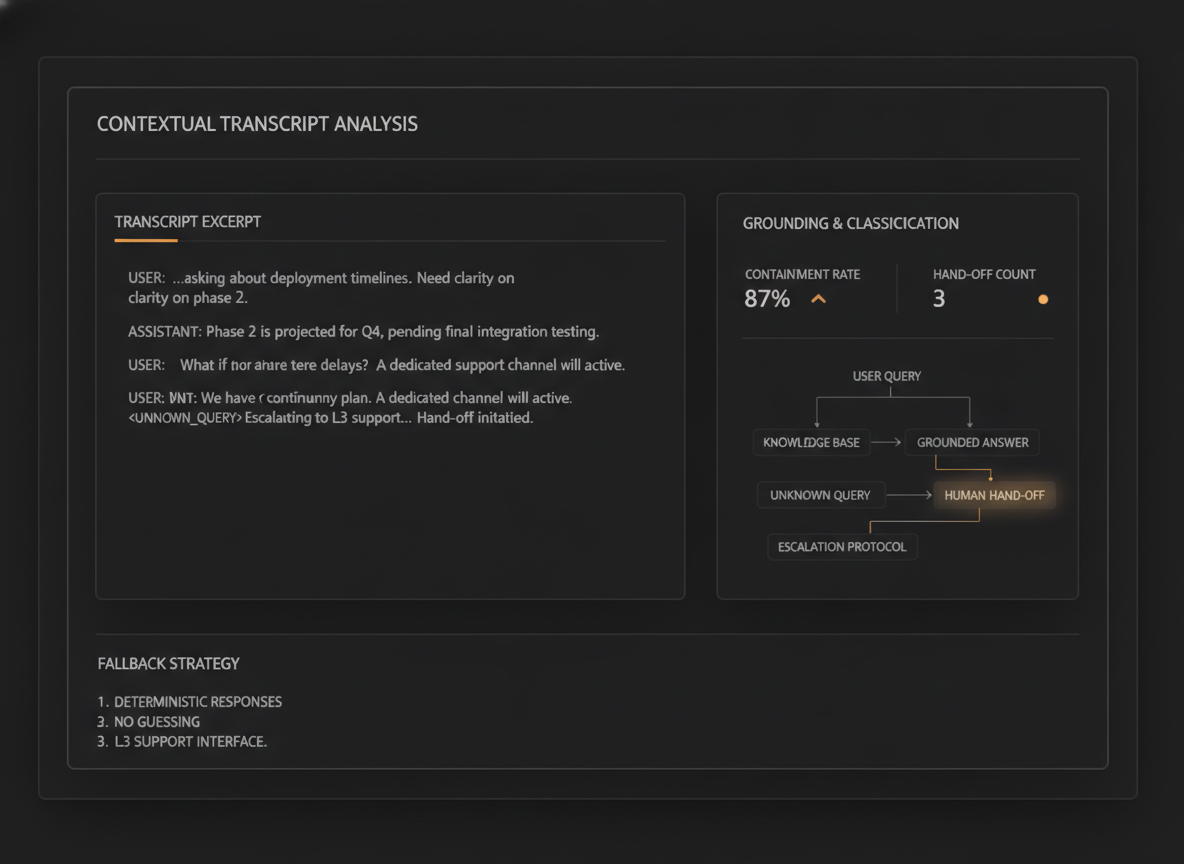
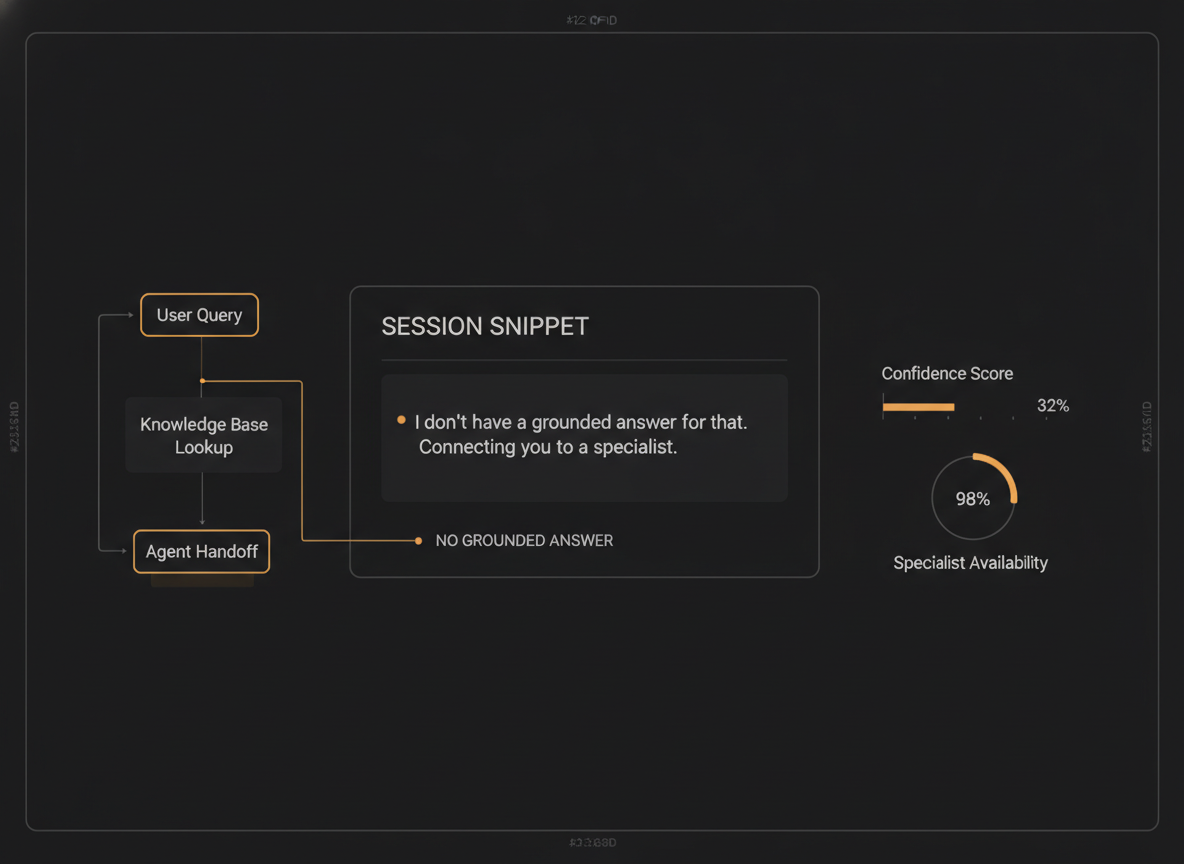
Deterministic fallbacks on high-risk topics, allow-listed answers, and a designed way to say 'I don't know', because a confident wrong answer at scale is a brand liability, not a rounding error.

Evaluation & accuracy benchmarking

A task-level eval suite built from your real transcripts that scores accuracy and containment before launch and after every change, so a prompt tweak can't quietly regress the agent.

Live monitoring & continuous tuning

Dashboards on containment, escalation, and accuracy plus full transcripts, so a wrong answer becomes a tracked fix and the agent keeps improving on real failures after launch.

Containment, not deflection, is the number that pays for a chatbot

Most chatbot business cases are sold on deflection — how many conversations the bot answered. That number flatters everyone and decides nothing. The figure that pays for the system is containment: how many conversations the agent actually finished, correctly, without a human ever touching them. A bot can deflect a conversation and still cost you money if the customer comes back angrier, or escalates to a person anyway after three useless turns.

So the first thing we do is the unglamorous part: rank your conversations by cost and volume and point the agent at the expensive ones. Automating the password-reset FAQ is easy and worth almost nothing — that queue was already cheap. The conversations that drain a support budget are the messy, multi-turn ones, and that is where the engineering and the payback both live.

Automate the expensive conversations, not the easy ones

We start from your cost-per-contact data. The agent earns its keep on the high-volume, high-cost queues — most vendors quietly automate the cheap ones because they demo well.

Escalation is a feature, not a failure

An agent that hands off cleanly with full context beats one that guesses to keep its containment score up. We design the exit as carefully as the answer.

A wrong answer costs more than a missed one

A customer forgives 'let me get a colleague.' They do not forgive a confident, wrong, on-the-record reply about their money, their order, or their health.

One dashboard for containment, CSAT, and cost

We instrument all three together so you can see whether the agent is deflecting volume or actually resolving it — and where it is quietly making things worse.

Rule-based, RAG, or fine-tuned — the architecture decision behind every agent that works

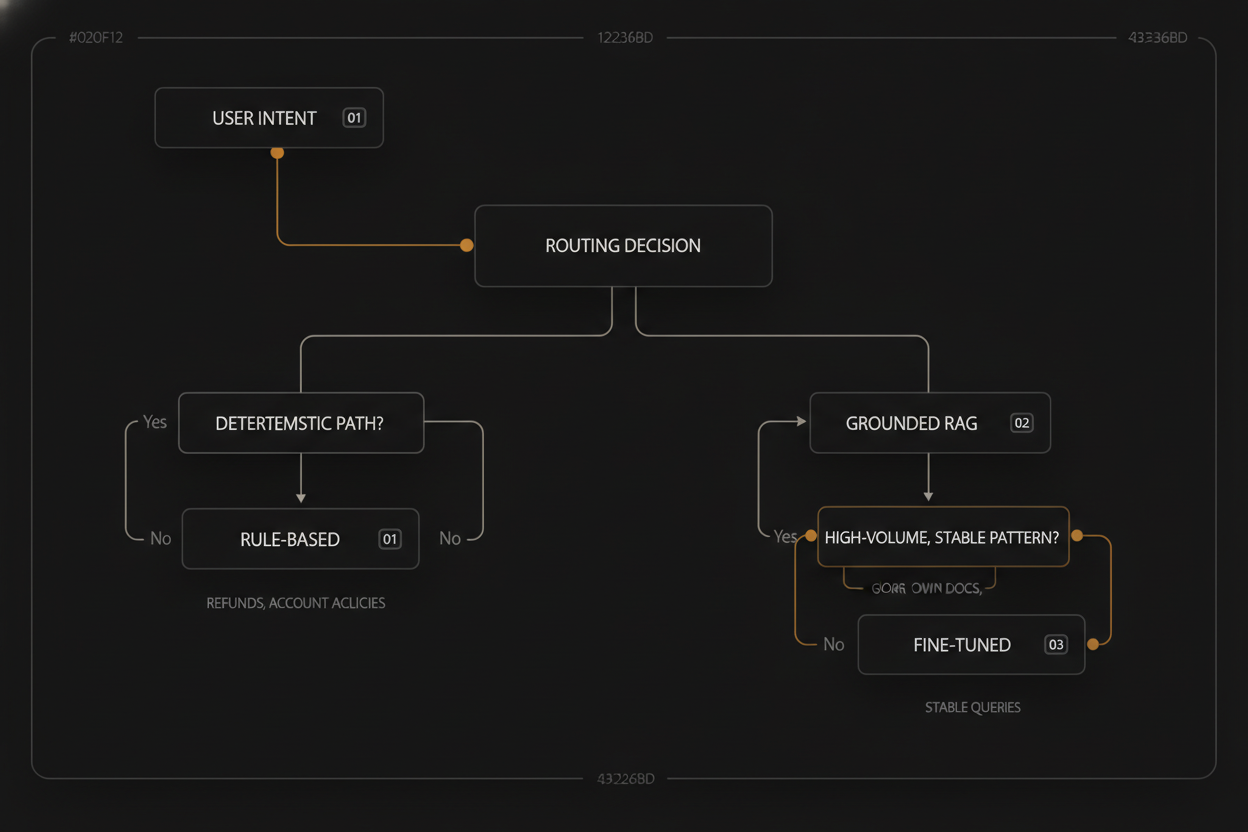
The reason chatbots feel either robotic or unreliable is almost always a mismatched architecture, chosen before anyone understood the conversation. There is no single right approach. A scripted flow, a retrieval-grounded model, and a fine-tuned model each fail badly in the wrong place and work beautifully in the right one — and the job of a serious build is to match the method to the risk of each conversation, not to pick a favourite and force it everywhere.

We make that decision explicitly, conversation by conversation, before writing the agent. A balance transfer needs a deterministic, exact answer; a how-do-I question over a 4,000-page manual needs retrieval; a brand that wants its agent to sound like a person needs fine-tuning on tone, not on facts. Most production agents we ship are a mix of all three, with grounding and citations underneath so the model answers from your data rather than its training-time guesswork.

Rule-based where the answer must be exact

Pricing, eligibility, legal language, anything regulated — these are decision logic, not generation. Code is more reliable than a model deciding the obvious, and we will say so.

RAG where knowledge changes faster than you can retrain

Product docs, policies, and tickets move weekly. Retrieval keeps answers current and cited without the cost and lag of retraining a model every time something changes.

Fine-tuning for voice and domain language, not facts

We fine-tune for tone, jargon, and conversational style — never as a way to memorise facts, which is where fine-tuned bots start confidently inventing them.

Grounding and citations over guesswork

Where the agent lacks a grounded fact or a permission, it says so and stops, rather than improvising. The default is to ground or to defer — never to bluff.

Why most conversational-AI projects never earn a support team's trust

We have been brought in to fix enough abandoned chatbots to know they rarely die of a weak model. They die of trust. The people who own the support queue quietly route customers around the bot, the containment number sags, and within a quarter the agent is a widget nobody uses. None of that is about intelligence; it is about the discipline around the model.

We would rather name these failures on the first call than bill you to rediscover them on the third. If your last chatbot was switched off, it almost certainly went out on one of the following.

The confident wrong answer

Without grounding and a 'don't know' path, the bot answers everything — including the things it has no business answering. One screenshot of a wrong reply ends adoption.

No graceful exit

A bot with no clean escalation traps customers in loops and trains them to type 'agent' immediately. The hand-off has to carry context, or every escalation starts from zero.

Brand-voice drift

An agent that sounds nothing like your brand, or worse, contradicts your policies, reads as careless to a customer. Voice and policy are part of the build, not a content afterthought.

Launched and abandoned

Conversational AI degrades as your products and customers change. Without monitoring and retraining on real failures, a great launch becomes a stale liability inside months.

Conversational AI already carrying real conversations

Metrics shown dotted (··) are being finalised in our case-study metrics pack — published only once verified. The deployments are live.

Elisa

A voice callbot that held the line through a national contact surge

  • ··%of contacts contained by the callbot
  • ··minaverage wait time after launch

When a national emergency flooded the telecom carrier with more calls than agents could answer, Banao built an AI voice callbot with natural-language understanding, wired live into the CRM with automated routing and escalation. It absorbed tens of thousands of contacts a day and turned a buckling legacy queue into an operation that could keep up.

Majra

A bilingual Arabic–English agent that turned document hunts into one conversation

  • ··%of intranet queries resolved in chat
  • ··%reduction in time lost to document search

The UAE's national CSR and sustainability authority was losing staff hours to scattered bilingual content. Banao built an English/Arabic agent grounded in internal data and wired into the SharePoint intranet, so hunting across platforms for the right document became a single grounded conversation in either language.

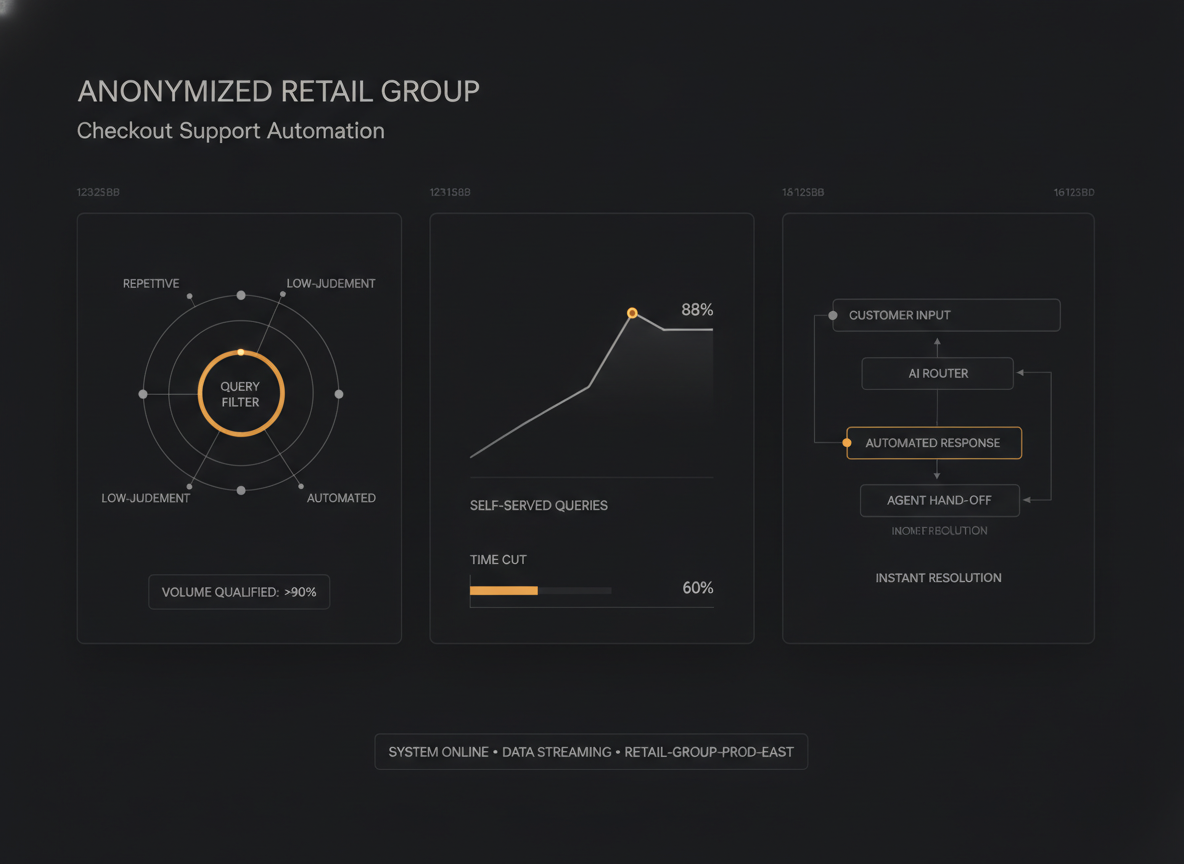
Retail group (anonymized)

Conversational commerce that deflects order-status volume without losing the sale

  • ··%of order-status contacts self-served
  • ··%of chats that recovered a stalled basket

A multi-brand retailer was burning agent hours on order-status and returns questions while losing carts to unanswered product queries. The agent answers from live order and catalogue data, handles returns end to end, and routes a buying-intent conversation to a human before the sale slips. Named reference available under NDA.

We run our own company on the conversational AI we sell

Banao operates a ~300-person engineering company on its own AI before any client sees it. A conversational agent runs the first round of our own hiring — it talks to candidates, scores the conversation, and hands a recruiter a shortlist instead of a pile. Our engineers get HR, IT, and policy answers from an agent grounded in our own documents rather than pinging a person.

That is the difference between a vendor who has read about conversational AI and one whose own operation depends on it every working day. By the time a pattern reaches your customers, it has already had to survive ours.

  • InterviewGodRuns Banao's own first-round screening as a conversation, before a recruiter opens the pile.
  • Internal ops agentAnswers our engineers' HR, IT, and policy questions from an agent grounded in our own docs.

Where we build and deploy conversational AI

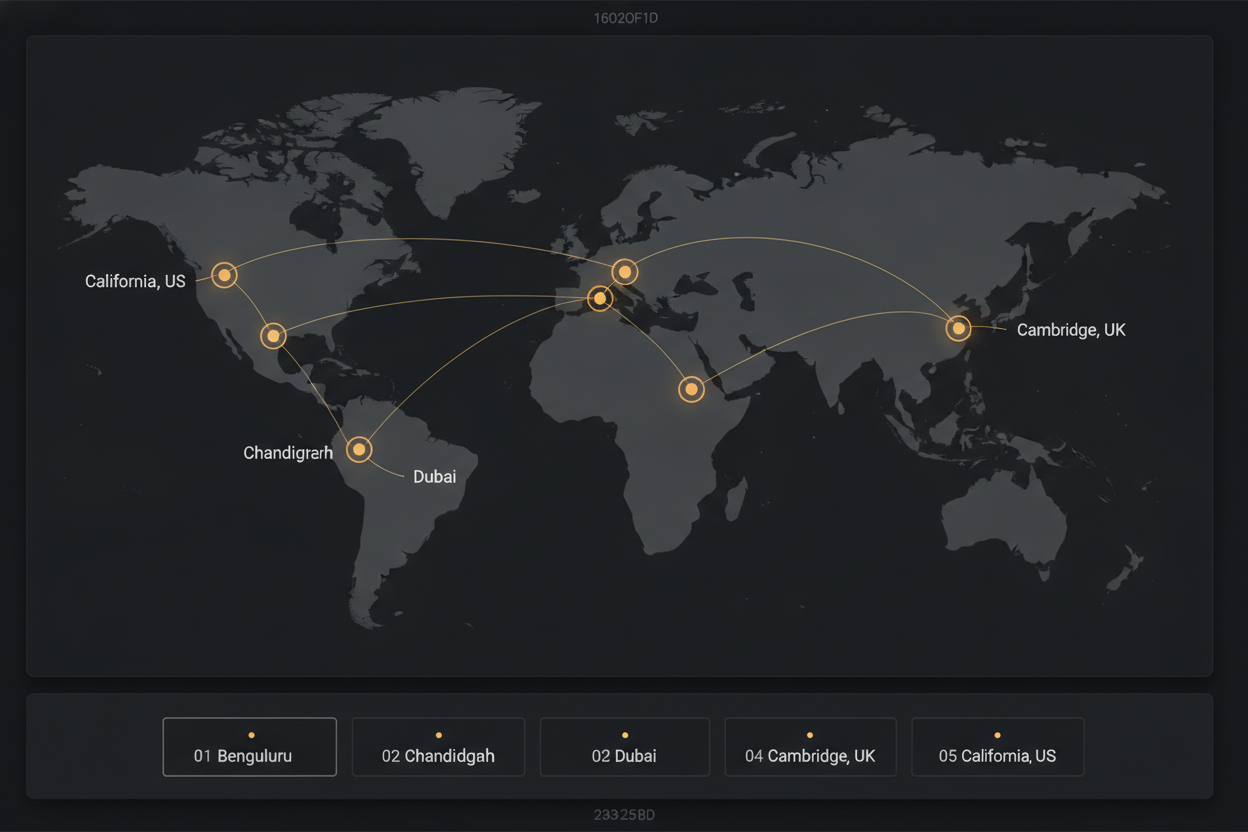
We deliver from offices in India, the UAE, the UK, and the US, and we build each agent to the language, channel, and data-residency rules its market expects.

GCC & UAE

Customer service in the GCC is bilingual by default. From Dubai we build English/Arabic agents — including the Majra assistant for the UAE national CSR authority — and keep conversation data inside UAE boundaries where the PDPL and client policy require it.

Saudi Arabia

Vision 2030 customer-experience programmes are moving from English pilots to Arabic-first contact centres. We build agents that handle dialectal Arabic, not just Modern Standard, and keep data in-Kingdom to meet PDPL and SDAIA expectations for banking and government workloads.

United States

Rising support labour costs and reshored contact centres make containment a board-level number for California and New York enterprises. We build to SOC 2 controls, with the consent handling and audit logging US risk and compliance teams now ask of any agent that talks to customers.

United Kingdom

From our Cambridge UK presence we support financial-services and public-sector agents under UK GDPR and ICO guidance, where an automated answer to a customer has to be explainable and the hand-off to a human accountable.

India

Bangalore and Chandigarh hold our delivery bench, so a build starts in weeks. We design to the DPDP Act and ship agents that handle Hindi and regional languages at the volume Indian consumer support runs at, close to the engineering that builds them.

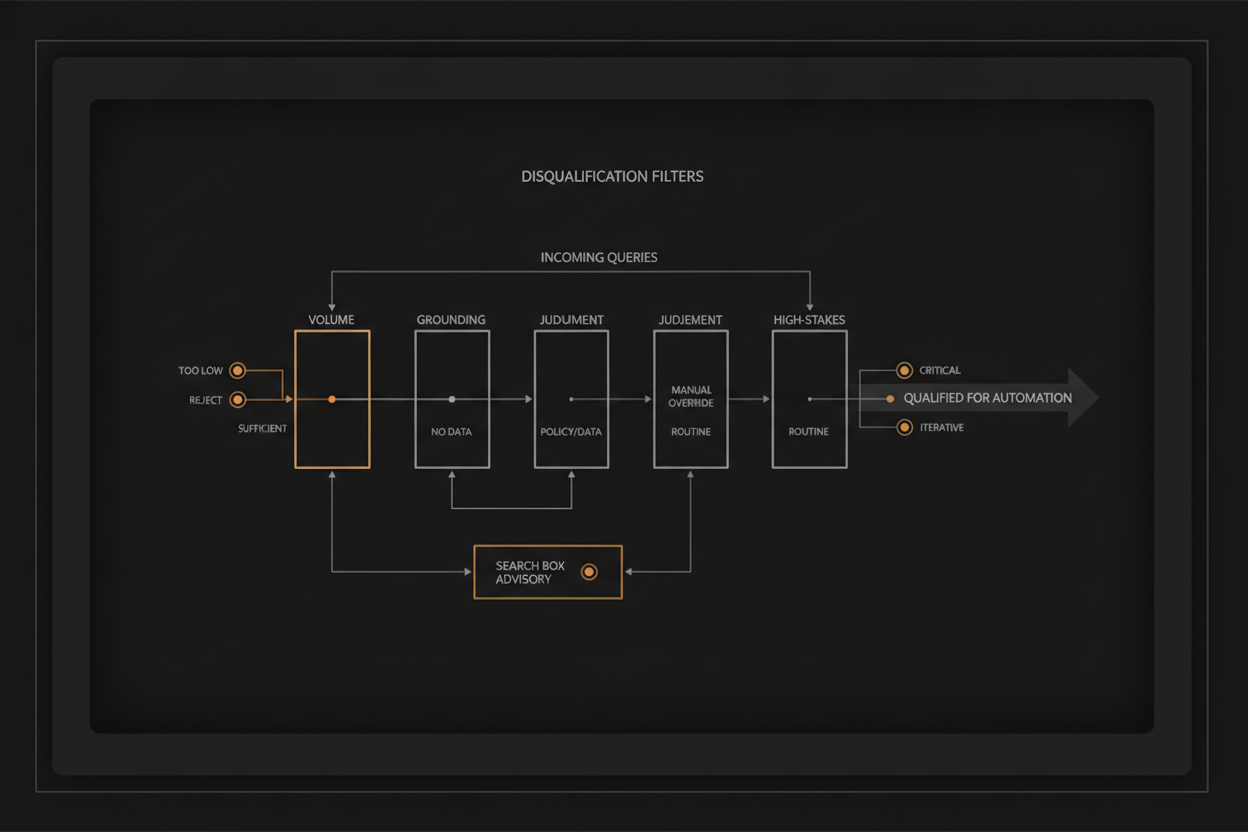
When a chatbot is the wrong tool

Most vendors will sell you a chatbot whatever the question is. We would rather tell you when not to build one — it is why technical and support leaders take our second call.

  • Low conversation volume: if a queue gets a handful of contacts a week, a person is cheaper than building, evaluating, and operating an agent for it.
  • Nothing to ground on: if there is no documentation, data, or transcript history for the agent to answer from, you are writing scripts, not building conversational AI — fix the knowledge first.
  • Conversations that are different every time: genuinely novel, judgement-heavy cases — sensitive complaints, edge-case disputes — belong with a person, with the agent triaging to them, not replacing them.
  • High-stakes, one-shot interactions with no escalation path: if a single wrong sentence is unrecoverable and there is no room for a human gate, an autonomous agent is the wrong shape.
  • A search box would do: if customers already know exactly what they want, good search or a form often beats wrapping it in a conversation.

How we start — prove the conversation before you build the bot

You have probably been pitched a chatbot by several vendors already. We start by proving which of your conversations an agent should handle and what it would contain, not by quoting a build.

  1. AI Discovery Sprint2 weeks · fixed price

    We rank your conversations by cost and volume, test feasibility on the hardest one, and hand back a scoped agent design, an accuracy and containment plan, and the ROI maths — yours to keep either way. If you proceed, the Sprint cost is credited against the build.

  2. Build

    We build the conversation design, grounding, integrations, guardrails, and the eval suite together — integration and evaluation are deliverables, not afterthoughts bolted on at the end.

  3. Production & continuous improvement

    We launch into your channels with monitoring on containment, escalation, and accuracy, then retrain on real failures and tune flows on a cadence — we run the agent like a system, not a project that ends at launch.

Frequently asked questions

A traditional chatbot follows scripted decision trees and breaks the moment a customer phrases something it didn't anticipate. Conversational AI uses natural-language understanding and retrieval to read intent and answer from your live data — and, just as importantly, knows when to escalate to a person instead of guessing.

It depends on how many conversations you automate and which systems the agent has to act on, so we don't quote blind. We run a short discovery to map your use cases, then scope a fixed price against a defined accuracy and containment target — a focused pilot is far cheaper than a sprawling 'do everything' build that never reaches production.

We ground answers in your own content with retrieval-augmented generation, add deterministic fallbacks on high-risk topics, and give the agent a designed way to say 'I don't know' and hand off. Then we monitor live transcripts so a wrong answer becomes a tracked fix rather than a recurring failure.

Yes — that is the point of the build. We wire agents into Salesforce, Zendesk, e-commerce platforms, and internal systems through their APIs so a conversation can trigger a real action: an order, a ticket, an account change. Integration is part of the deliverable, not a separate project.

Both. We build voice agents and callbots with natural-language understanding for phone lines, IVR, and in-app calling — the same architecture behind the Elisa callbot that absorbed tens of thousands of contacts a day — as well as chat agents for web, WhatsApp, and messaging.

Yes. We build multilingual and bilingual agents, including English/Arabic for GCC clients such as the UAE national authority Majra, and agents that handle Hindi and regional languages for India. We design for dialect and tone, not just literal translation.

A focused pilot commonly ships in 3–6 weeks; a larger integrated deployment runs 2–3 months depending on systems and compliance. Banao's ~300-engineer bench means delivery begins in weeks, not the months a fresh hire would take to start.

No — and an agent sold as a replacement is usually the one that gets switched off. The aim is to take the high-volume, repetitive conversations off your team so they handle the judgement-heavy ones, with the agent escalating cleanly. Containment goes up; the hard work stays with people.

On containment — how many conversations the agent finishes correctly without a human — alongside CSAT and cost per resolved contact, not raw deflection. We instrument every agent with those metrics plus full transcripts, so you get a dashboard and a feedback loop, not a black box.

You own all of it: the code, the trained models, and the conversation data. We work under NDA, apply encryption and role-based access, keep data in the region your policy or regulation requires, and sign DPAs for regulated industries like finance, healthcare, and government.

Find out which of your conversations an agent should carry

Bring the queue that eats the most agent hours or loses the most customers. In 45 minutes we'll tell you whether conversational AI is the right tool, what it could contain, and what it would take to put it in production.

Book a 45-min scoping call